
- Honorary MA, University of Cambridge) (2024)
- LPC, The University of Law (2002-2004)
- LLB, Birkbeck, University of London (1997-2001)
- Assistant General Counsel, Cambridge University Press & Assessment
- Senior Counsel, Editorial and IP, Cambridge University Press & Assessment (2018–2021)
- Legal Counsel, Editorial and IP and Team Lead for Global IP Programme, Cambridge University Press & Assessment (2015–2018)
- Business Affairs Counsel, The Elton John Group (2012–2015)
- Corporate Counsel, Associated Press (2011–2012)
- Director, Business Affairs, EMI Music North America (2006–2011)
- Trainee and NQ Solicitor, LeBoeuf, Lamb, Greene & MacRae LLP (2004–2006)
- Legal Affairs Executive, Capital Radio Group (2001–2004)
- Music Contract Executive, BBC Worldwide (1999–2001)
- Legal Assistant, BBC Worldwide (1997–1999)
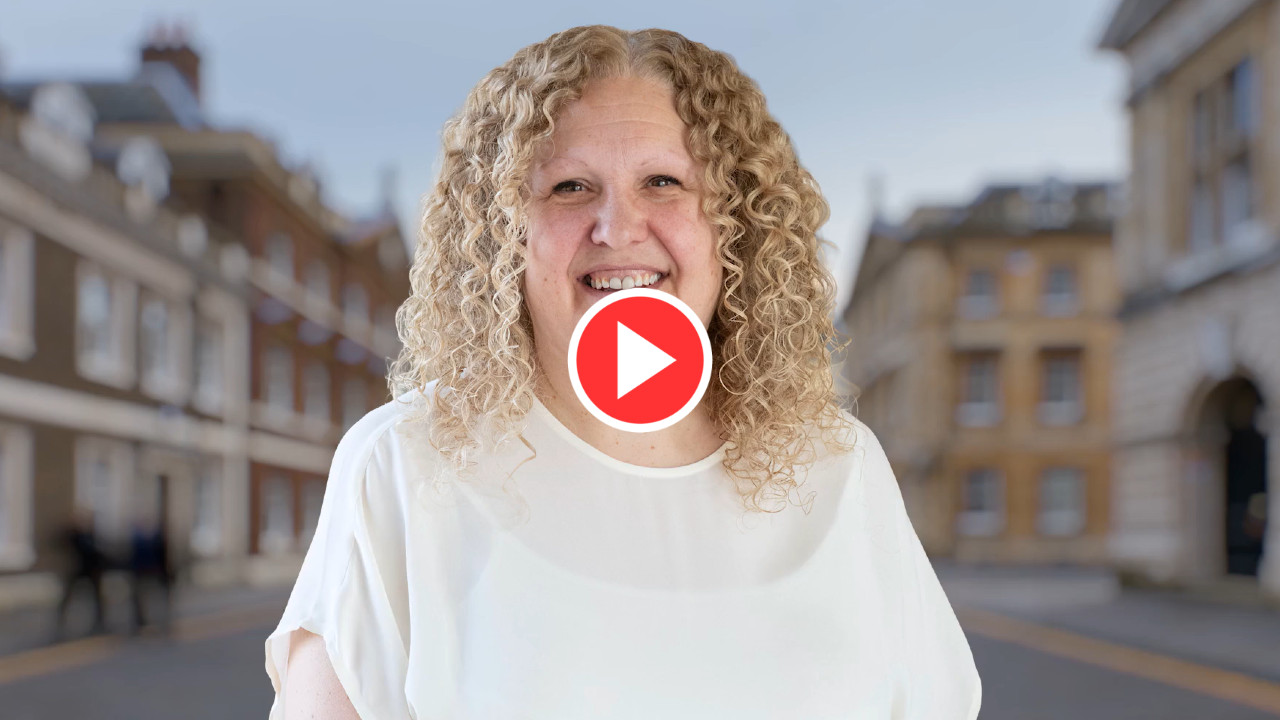
Rachel Richards is an Assistant General Counsel at Cambridge University Press & Assessment, a leading academic publisher and assessment organisation. She shares her journey into law, career highlights and advice for aspiring lawyers.
What were your early career ambitions?
I started my legal career in-house, in paralegal roles. During that time, I was regularly dealing with external law firms and applying for training contracts. I saw becoming a solicitor in private practice as my career goal. My primary ambition was to work in a private practice media firm. I realised during my training contract that whilst private practice could offer many benefits, a legal career within a firm would always mean being one step removed from the actual business and commercial imperatives of the clients I was advising. I realised I enjoyed being part of an in-house legal team much more. I knew that, upon qualification, I would seek to return in-house as a qualified solicitor.
What’s your current role and what does it involve?
Cambridge University Press & Assessment (CUP&A) is a global profit-for-purpose business and is a department of the University of Cambridge. To support the publishing and examination businesses within CUP&A, we have a Legal & Business Affairs department of approximately 50 people. Within this department, I lead a team of eight, comprising both lawyers and non-lawyers. Together, we support all legal issues relating to IP. This includes copyright, defamation, image rights and designs. As well as brand protection, including trademarks, infringements, counterfeits and piracy.
What’s been the proudest moment of your career so far?
There have been a few notable moments in my career. Receiving a training contract was a pivotal one. A training contract was the only route for me to secure funding to complete the LPC. As a working-class mature student with no family or other connections to the legal profession, securing a contract seemed almost impossible. Being granted a place as one of only five trainees in my cohort at a US law firm was invaluable to both my confidence and my career development.
I also loved my years of working in the entertainment and music industries. There were hundreds of highlights but seeing my name printed in Sir Elton John’s world tour programme for the first time was the most memorable.
It may sound cheesy but my current role has provided me with some of the proudest memories in my career. Our tiny Brand Protection Team was nominated last year for a Financial Times Innovative Lawyers Award. We were against teams from media giants including Vodafone. Attending the ceremony at the Natural History Museum and seeing our team gain recognition on a national stage made me incredibly proud.
Why did you choose to study at The University of Law?
I studied for my LLB part-time whilst working as a paralegal at the BBC. I loved studying law at undergraduate level and knew I wanted to pursue an LPC qualification. When I secured a training contract, the law firm offered to fund my LPC if I chose to study at one of the accredited providers. One of these was the College of Law which is now called The University of Law. The University was my first choice because it was the leading centre for LPC education.
I also thought the structure of the part-time evening course was great. It enabled me to keep building on my working experience and maintain the financial income of my full-time job.
Who inspired you during your studies?
My fellow LPC classmates inspired me during my studies. Everyone was working during the day and studying in the evenings. Some even funded their own studies. It was amazing to see us all achieve our LPC qualification, having supported each other through two years of challenging study.
What qualities do you need to become an Assistant General Counsel?
You need to be a good lawyer, a supportive manager and have a passion for how legal work supports the commercial aspirations of the business. There’s no point sitting in a legal department that no one ever talks to. When you work in-house, your clients are your colleagues. Learn what makes your company tick and enjoy being part of what makes the business a success.
How did you get your current role?
I originally joined CUP&A in 2015. I was at a stage where I was planning a family. As much as I loved the 24/7 nature of working in the entertainment industry, I knew I couldn’t sustain that way of working. An informal meeting with the then-General Counsel at CUP&A confirmed that interesting and challenging legal jobs weren’t limited to being in London. I was reassured that I had a wealth of experience to offer this industry and could reshape my working life to achieve a better work/life balance. I joined Cambridge as a Legal Counsel. After my maternity leave, I was asked to step up to Senior Legal Counsel. In that role, I took up more line-management responsibilities for a growing team. That position transitioned into my current role as Assistant General Counsel. I work alongside other senior leaders within Legal & Business Affairs. I also lead an Editorial & IP team based in the UK and Singapore.
What is Cambridge University Press & Assessment’s perspective to flexible working?
I count myself as extremely lucky to have found that “holy grail” of legal careers. I have a diverse role which challenges me every day whilst offering the flexibility of working around the logistics of being a single parent. It has allowed me to be both a valuable lawyer and a good mum. Cambridge is an amazing employer in terms of flexible working. They offer great support, including a kids’ holiday club on-site during school holidays. They also have an encouraging attitude. They believe an employee with a full life outside of work can deliver exceptional things if the work/life balance is right.
What advice would you give to students keen to work at Cambridge University Press & Assessment?
Academic study will only get you so far. Get some work experience and life experience. Network, particularly with people who don’t come from the same background as you. So much of our work at CUP&A depends on connecting with people around the world. This can be customers, colleagues and content creators. To have a successful career, developing your communication skills is as important as any academic qualification.
Are there any opportunities with your company?
We offer a wide range of different initiatives, from career days to work experience. We also have interview practice for school students and internships for undergraduates. The majority are organised in collaboration with local schools, universities or social mobility organisations, with a focus on access to the legal profession. When applying, remember to show you’re passionate about what we’re doing and that you’ve done your research.
What should someone expect in the recruitment process?
During the recruitment process, expect to meet with the line manager and the HR representative. We also like to give people a tour of our campus and meet members of the wider team.
What are your top three networking tips for students aiming to break into your industry?
Getting a paralegal or legal admin job won’t ‘pigeonhole’ you as a non-lawyer forever. Paralegal work not only teaches you fantastic legal skills but also gives you the chance to network with lawyers and senior managers. One of my roles as a qualified solicitor came through my previous paralegal colleagues.
If there’s someone out there doing a job you think you’d love, ask them to have a 30-minute coffee to talk to you about their role. Busy people get flooded with requests for career help. Recognise that even 30 minutes is a meaningful chunk out of their day. Be respectful and keep your request brief and informal. You could gain expert advice, new connections and valuable recommendations.
Don’t do all your networking online. LinkedIn and similar platforms can be really useful but they are not a replacement for real-life connections. Go along to legal events, introduce yourself to speakers, ask questions and participate in discussions. I’m much more likely to remember a student I spoke to at an event than one who has simply sent me an online request.
What changes do you foresee in your area over the next few years?
Artificial intelligence is a game-changer for all the creative and media industries. The challenges in protecting original content are huge and we’re constantly fighting new frontiers of copyright infringement. On the flip side, AI can help us. We can create products and services in a range of innovative ways. We must continually ensure we’re developing our business in an ethical way and respecting the rights of content creators.
What advice would you give your 18-year-old self?
I left school at 16. At 18, I felt adrift and confused about what I was supposed to be doing with my life. My friends had all stayed on at school, achieved A Levels and were going off to university. I felt left behind. I had no idea I would complete a law degree and LPC and build a successful legal career. I would reassure my 18-year-old self that leaving school at 16 wouldn’t prevent me from having an amazing career and enjoying life-changing opportunities. The path might be a little more complicated but the value of several years of work under my belt would turn out to be my superpower. It gave me an advantage when competing for legal roles against other candidates.
Originally published in 2026.
A law degree opens up so many career paths. Find out about the law courses we offer or learn about our flexible study options.
Our Alumni Profiles
If you enjoyed this article, why not check out some more of our alumni profiles?
See more